


1. June - 31. October 2000

Czech Republic

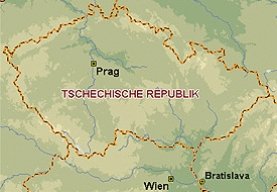
The heart of Europe
The Czechs are an old cultural nation and have had a profound influence on European intellectual history. The first university of Central Europe was founded in 1348 in Prague. The Hradschin - the famous Prague castle, which continues to dominate the cityscape to this day - was built way back in the 9th century under the rule of the Primislide princes. The historical St. Wenceslas Square in Prague is named after the national saint and Primislide prince St. Wenceslas (Václav).
For nearly 300 years, the Czechs and Slovaks belonged to the Habsburg empire, until they became independent after the 1st world war as the Republic of Czechoslovakia. Early industrialisation - in the 19th and 20th centuries the country was one of the leading industrial countries in the world - had favoured the development of a self-confident national movement. But independence was brought to an abrupt halt through the Munich Agreement and subsequent German occupation in March 1939. After the end of the 2nd world war, Czechoslovakia enjoyed a brief democratic renewal, but came under the influence of the Soviet Union as from 1948.
It wasn't until the "gentle revolution" of 1989 that freedom and democracy returned to the country. And finally on January 1, 1993, the former Czechoslovakia was peacefully divided into two sovereign states. The world-famous author and civil rights activist Václav Havel became the first State President of the Czech Republic. Václav Havel was spokesman of the civil rights movement "Charta 77" founded in 1977.
In spite of decades of suppression, the cultural creativity of the Czech people developed. The capital Prague has famous theatres, cabarets, jazz clubs, art galleries, antique specialists and orchestras. The Czech film is renowned world-wide. Milan Kundera is one of the best-known authors in Europe. And this year, Prague is one of the cultural capitals of Europe.