


1. June - 31. October 2000

Thailand

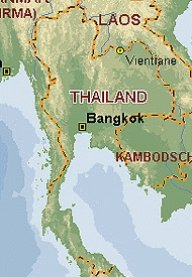
Elephant with trunk
The geographic outline of Thailand recalls an elephant head with a long trunk. Located in the centre of the south-east Asian mainland, the country stretches in the south down to the peninsula of Malacca. The history of the Thai state begins nearly 800 years ago with the foundation of the Sukhothai kingdom. In 1350, a prince from Ayutthaya assumed power, and the kingdom of Siam flourished economically and culturally for 400 years. The country succeeded in playing the rival colonial powers off against each other. Thailand is the only country in south-east Asia which was never under colonial rule. The royal family still ruling today was founded in 1732 by Rama I.
The absolute rule of the Siamese kings was brought to an end in 1932. The "Land of the Free" was given the name it bears today and became a constitutional monarchy. The royal family remained an essential guarantee of political stability in the troubled times during and after the second world war, and still plays this role today. In addition to the royal family as symbol of national unity, it is Buddhism which defines the identity of the Thai. Nearly the whole population of Thailand are practising Buddhists, supported by 300,000 monks.
Thailand and its capital Bangkok constitutes one of the main trading centres of the region. For more than 10 years, record growth rates made it a second-generation "tiger country". And the Asia crisis, which started with the devaluation of the Thai bath, seems to have been overcome. In spite of rapid industrialisation and the development of tourism, agriculture and forestry are still economically significant. In earlier times, huge working elephants transported the teak trees down out of the forests. But since 1989 the export of hardwood has been banned in order to prevent further overexploitation.