


1. June - 31. October 2000

Spain

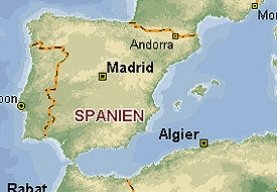
Spain is different
España es diferente: "Spain is different". Thus both Spaniards and tourists like to describe the country. Traditional customs and practices were kept alive in Spain for longer than in the rest of Europe. One reason for this was the political and cultural isolation of the country during Franco's dictatorship of almost forty years during which he froze the country into a veritable museum piece.
Spain is still "different", but since the introduction of democracy in the middle of the 1970s has been undergoing a far-reaching transformation. Writers such as Manuel Vázquez Montalbán, best known outside Spain as an author of detective novels, and Javier Marías have documented the development of Spanish society in their works. And the film director Pedro Almodóvar adds a touch of irony to his portrayal of his fellow countrymen.
With the revival of regionalism, languages such as Catalan, now the official language of Catalonia, and Galician, have enjoyed a Renaissance. The Basque language is once again taught in schools of the Basque country since the grant of autonomous status in 1978.
Today the mountainous regions of Spain enjoy good transport links. At the end of the 1970s a journey from Madrid to Andalusia would have taken a whole day. Now, with the construction of a good motorway network, it is possible in three to four hours. Modern high-speed trains such as the "AVE" have reduced the travel times between Barcelona, Madrid, Seville and other cities to mere hours.
Spain benefits from its cultural links with Latin America, particularly in the EU where it is the European Ambassador in Latin America. As a result of its close links with North Africa - after all, Spain was under Moorish rule for almost eight hundred years from 711 until 1492 - Spain is an advocate for the deepening of Mediterranean relations within the EU.