


1. June - 31. October 2000

Switzerland

Democratic Confederation
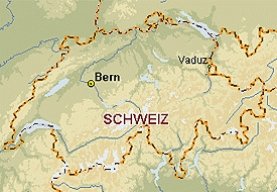
Switzerland with its 26 cantons is the smallest federal state in the world. Here, three great European cultures meet and four languages are spoken: German, French, Italian and Romansh.
When in 1291 the three communities Uri, Schwyz and Unterwalden united with the Rütli-Pledge to the "Everlasting League", they laid the foundation for the Swiss Confederation that has been existing since 1803 in today's borders. For centuries carefully keeping its independence and staying strictly neutral, Switzerland is neither a member of the European Union nor the United Nations. Despite - or because of - its policy it plays an important role internationally.
Geneva is the "Second Capital" for the United Nations after New York. The buildings of the former League of Nations house the World Health Organisation, the International Labour Organisation and the World Trade Organisation. The International Committee of the Red Cross has its seat in Geneva as well. The Swiss Henri Dunant was the founder of the Red Cross.
Not only Swiss banks - of which there are more than 200 in Geneva alone - are the basis for Swiss wealth. The quality and solidity of their industrial products are proverbial: Every year 28 million of the famous Switch watches are exported. The pharmaceutical and chemical industry is one of the leading industries world wide. Swiss chocolate and Swiss cheese are world famous.
The political system of Switzerland permits the direct participation of its citizens. The constitution guarantees plebiscites for decisions of the Parliament that affect all citizens directly. In September 1990 for instance, the Swiss decided with a referendum to stop the construction of nuclear power plants.