


1. June - 31. October 2000

Romania

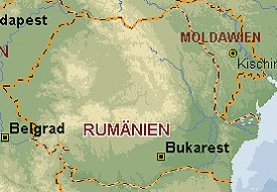
From the Carpathian Mountains to the Danube estuary
Romania has many different landscapes to offer: The centre of the country is the Transylvanian Basin. It is surrounded by Carpathian Mountains, also called Romania's backbone. In the Southwest the Banat massif, in the South the Walachia bordering on Bulgaria. The Danube is the border river to Serbia as well as Bulgaria. It flows into the Black Sea in Romania. The estuary is a unique primeval landscape with extended swamps where rare waterfowl have their breeding places. The probably most famous port at the Black sea is Konstantia. In Tomis - as the city was called in old times - the poet Ovid died in the year 18 after living here in exile for 10 years. Romania was part of the Roman province Dacia. The romanised population kept the Roman culture till today, especially the Latin language and writing, despite the later Slavic influence.
The biggest minority with 7 per cent are Hungarians. 1.5 per cent of the population are of German descent. Among them the "Banat Swabians" who settled in the area at the beginning of the 18th century, and the "Transylvanian Saxons" who have been living in Romania since the 12th and 13th century.
Already in ancient times grapes were grown in Romania and until today, it is one of the biggest wine producing countries in Europe. Romania has rich natural resources. At the beginning of the 80s large oil deposits were found in the Black Sea. But the country suffers from the still-lingering consequences of the Ceaucescu-era and belongs to the poorest countries in Europe.