


1. June - 31. October 2000

Netherlands

Reclaiming land...
"God created the earth, but the Dutch created Holland". This old Dutch proverb is a reference to the centuries of struggle by the Dutch people to retain the land. A large area of the North and West lies below sea level and requires continuous draining. Already since the Middle Ages the Dutch have had an ingenious drainage system. In former times their numerous windmills were used to transport water from collecting tanks to the canals; today electrical pumps fulfil this task. Thanks to drainage the surface area of the Netherlands has been increased by over one fifth, while a system of sand dunes, dams and dykes protects the country from being inundated.
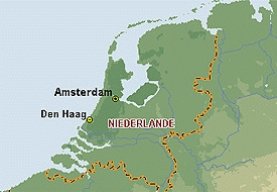
The Kingdom of the Netherlands is amongst the most densely populated countries in the world. In the "Randstad Holland", a ring-shaped conurbation between Utrecht/Hilversum in the North-East and Dordrecht in the South-West, the industrial and commercial centres are situated. These include Amsterdam, the country´s capital city, the Hague, the seat of the government, and Rotterdam, possibly the world´s most important port. The green area in the centre of this urban ring is used for farming and, at the same time, serves as the recreational area for the region´s population.
Amsterdam is not only the country´s economic and financial centre but also its cultural centre. The historical part of the city is one of Europe´s best-preserved city centres. It is the location of the famous Rijksmuseum, with its valuable collection of Dutch paintings of the 16th and 17th century, including Rembrandt, Jan Vermeer and Frans Hals...
One of the Benelux countries, the Netherlands is a founder country of the European Communion. It was in the small Dutch border town of Maastricht where, in 1992, the European Union treaty was signed, in which the criteria for the introduction of the Euro were established.