


1. June - 31. October 2000

Nepal

On the world's roof
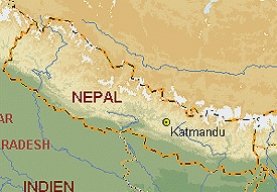
The world's roof is located in Nepal where eight of the ten highest mountains on earth are situated. Three quarters of the South-Asian nation is covered with mountains.
Its geographical location long contributed to its isolation. To be able to protect national independence against China in the North and the British colony of India in the South, any kind of contact with the outside world was cut off for more than 100 years. As late as in 1950, the country was opened up to influence from outside. After several approaches towards democratisation, the introduction of a parliamentarian system with parties was successful in 1990. Up until today, monarchy plays an important role for the unity of this multi-lingual and multi-ethnic country.
Hinduism and Buddhism have substantially influenced Nepalese cultural life. Temples with artful wood carvings and pyramid roofs are examples for cultural tradition and diversity in Nepal. Several thousands of palaces and worship grounds are located mainly in towns situated in the Kathmandu Valley and in the southern region of the country.
For a long time, economic development was difficult due to the remoteness of the country. Despite important progress, agriculture is still dominant nowadays. The mountainous landscape provides the most significant resources, though. Rivers running southwards from Himalayan mountains can be used for generating hydroelectric energy for which there is high demand especially in India. Mount Everest and the other eight-thousand-metre mountains are destinations for mountaineers and climbers. Tourism provides Nepal with important foreign currency income. By further developing a yet young democracy and settling its internal conflicts, Nepal will be able to make full use of its natural particularity and its cultural diversity.