


1. June - 31. October 2000

Croatia

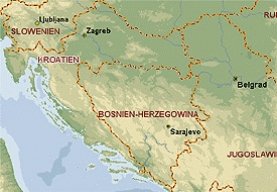
Land on the border
A country like a continent: The North and Northeast of the Croatian crescent-shaped country are rather Central European whereas the Adriatic Sea costal strip is more Southern-Mediterranean in culture and climate. Again and again in history, Croatia was a border country. Here was the border between the Eastern and Western Roman Empire and later between the Franks and Byzantium. Here the empire of the Austrian Habsburg dynasty and the Turkish Ottomans met.
Even though the Croats took in many cultural influences they were always Western orientated. They use the Latin alphabet although their neighbour Serbs write with Cyrillic letters. Till today the majority of Croats is Roman-Catholic, the Serbs belong to the Orthodox church. An independent state of Croatia existed only from 925 till 1102. But despite the long foreign rule the Croats kept their cultural uniqueness.
In the 20th century the country was first part of the Kingdom of Yugoslavia and after World War II part of the socialist Federal state. Repeatedly the Croats fought for more autonomy and against the "Serb dominance" in the federation.
After the downfall of the Communist regime free elections became possible in 1990 and were won by the Croatian Nationalists. On the 25 June 1991 the independent Republic Croatia was declared. The Serb minority felt threatened and called upon the Yugoslav army for help. A civil war ensued lasting until 1995 and moving the whole of Europe.
In June 1996, the UN Security council sent 5,000 UN soldiers and civil observers who were to help along the reintegration of the Serb Kraijna, among other things. On the 23 August 1996 the Republic of Croatia and the Federal Republic of Yugoslavia recognised each other politically. The rapprochement of Croatians and Serbs has become possible and the country is starting to recover slowly from the wounds of the civil war.