


1. June - 31. October 2000

Japan

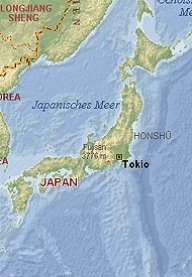
The land of the rising sun
Cameras, televisions, cars, motorcycles - around the world Japan's hi-tech products demonstrate this country's high economic efficiency. For over 30 years Japan has been the second largest industrial nation in the world and the economic centre of the growth region East and Southern Asia.
In its long history Japan has repeatedly experienced phases, during which it has opened up to the outside world, and phases of isolation. Buddhism and the Chinese alphabet bear witness to China's early influence on Japan. In the 17th century, however, the Chinese and initial European influence were repressed. The expulsion of all foreigners and a prohibition on travel for the Japanese brought about a period of national pacification and cultural ascendancy, yet, at the same time, led to social stagnation. 200 years later, Meiji-Tenno, the reforming emperor, re-opened the country and launched a comprehensive programme of modernisation for both the state and society. Japan's exemplary school system and railway system originated during this period.
Thus began an era of Japanese politics as a major world power, which was to meet a terrible end with the atomic destruction of Hiroshima and Nagasaki at the end of the Second World War.
The opening up of Japan to the West has also made its art and culture known around the world. The first novel in the history of the world, the "Tale of Genji", came from Japan. In 1968 the author, Yasunari Kawabata, was awarded the Nobel prize for literature for his poetic short stories, which pick up on old literary traditions. Films, such as "The Seven Samurai" and "Rashomon", are regarded as masterpieces of international cinema. Martial arts, too, such as sumo wrestling, have become popular even beyond the borders of Japan.