


1. June - 31. October 2000

India

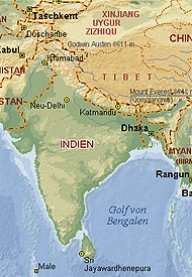
Spirituality and high-tech
Several millennia of cultural history make India one of the cradles of civilization. Buddhism and Hinduism have their origins on the Indian subcontinent, whilst during Mogul rule Indian culture was influenced by Islam. 350 years ago, the Mogul ruler Shah Jahan was responsible for building the Taj Mahal as a symbol of love for his wife. This temple of white marble is one of the wonders of the world. The fascination of India's rich spirituality stretches far beyond its borders, with meditation and relaxation techniques such as Yoga practiced worldwide.
India has also made itself felt politically and economically throughout the world, having achieved independence in 1947 after 200 years of colonial rule. Mahatma Ghandi's teachings of non-violent resistance had a great influence on the freedom movements of the Third World during the period of decolonization. During the Cold War India had a substantial influence on the policy of nonalignment. Today, on the basis of absolute production figures, it is among the major industrial nations of the world. Its space travel, electronics and nuclear industries are highly developed. Indian engineers and scientists are sought after worldwide.
India is the second largest nation in the world in terms of population, with a figure totaling around a billion. The wide variety of religions and languages of its citizens is reflected in the federal division of the nation into 26 federal states and six union territories. In addition to Hindi and English there are 14 official regional languages. Despite the federal system and successful economic modernization there are still social tensions and religious conflicts. Even today, in rural areas the caste system continues to define the lives of a large sector of the population, while conquering poverty remains one of the major challenges facing the Indian economy and society.