


1. June - 31. October 2000

Finland

Suomi: forest and lakes
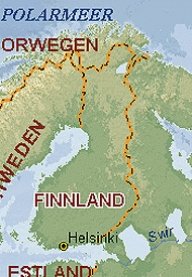
"The country of 1000 lakes" is one of Finland's names, although no-one really knows how many lakes there really are. Even if one only counts the inland lakes with a diameter of over 200 metres, these alone number over 50,000. They were formed in the Ice Age when the ice seeped into clefts and valleys, which, as the ice melted, filled up with water. Approximately one tenth of the surface area of Finland is covered by inland lakes, while forest accounts for another 70 per cent.
Naturally enough, wood-processing has an age-old tradition in Finland. Today, too, factories which produce cellulose, paper and furniture offer a major contribution to the country's economy. Finnish design is renowned world-wide not only in furniture but also in textiles, glass and ceramics. The nation's wharves play a significant role in special-purpose shipbuilding - from icebreakers to luxury liners.
Another important "export product" dates back to over 1,000 years ago: the Finnish sauna. It is regarded as a national institution and long ago set off on its course as a major success around the globe.
A national peculiarity is the Finnish language, which bears no similarity to the Indo-Germanic languages. Linguistic experts assume that Finno-Ugric originated in the region between the sharp bend of the Volga and the Ural. The second official language is Swedish. Finland was part of the Swedish Empire for centuries and was again and again a battlefield in wars between Russia and Sweden. It has been an independent republic since 1918. After the Second World War it pursued a policy of strict neutrality and played an important role as a mediator between the East and the West. "The Helsinki Accords" made the name of its capital city into a symbol for the overcoming of the Cold War.