


1. June - 31. October 2000

Germany

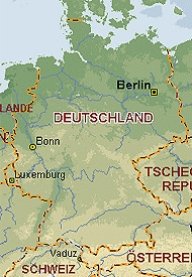
One country - many states
The German Empire earned its nickname "German patchwork" from its situation since the 17th century. The Peace of Westphalia ended the religious fighting in the Thirty Years' War and religious sovereignty was confirmed. Emperor, Princes and Electors were regarded as equals and the Empire was divided up into many territories. What was seen as a weakness in external politics led internally to the formation of many regional centers. Every sovereign prince furnished himself with opera, theatre, universities and museums - a cultural diversity the Germans profit from to this day.
German unity only succeeded in the second half of the 19th century under Prussian leadership. However, this stronger German state soon terrified its neighbors. Two World Wars were started on German soil in the 20th century.
During the Second World War, Nazi Germany occupied its neighboring countries. Genocide of the European Jews as well as the Sinti and Roma was organized using industrial methods: a crime against mankind of previously unimaginable magnitude.
When Europe had freed itself from the Nazi terror, Germany was for a time put under the supervision of the four Allied powers. While the Soviet-occupied zone emerged as a separate state, the German Democratic Republic, the three 'Western Zones' merged to become the Federal Republic of Germany. The borders of the newly-created states corresponded to the area's historical regional structure.
After the War, Germany became one of the most important playing fields during the Cold War. The border between the superpowers ran straight through the middle of Germany and Berlin. For forty years, it seemed insurmountable. Political change in the eastern block led to the fall of the Berlin Wall on November 9, 1989. Just one year later Germany was reunited. The five "new federal states" from the former GDR joined the Federal Republic.