


1. June - 31. October 2000

Denmark

Land of the Vikings
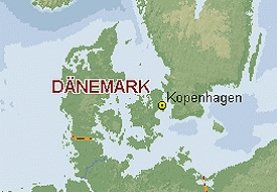
In relation to its area, Denmark has the longest coastline of any country in the world. 5,000 kilometres of beach and 7,300 kilometres of coast can be found around the peninsula of Jutland, Zealand, Funen and the roughly 470 smaller Danish islands.
Today bridges connect the important islands with each other. In June 1998 the Storebelt Bridge with a length of 13.4 kilometres, connecting Funen and Zealand, was opened for traffic. For the first time in its history, the capital Copenhagen can be reached from the European continent by land. Copenhagen is the political, cultural and economic centre of the Kingdom. Every fourth Dane lives in the capital nowadays.
The rich Danish history is strongly marked by the country's strategically convenient situation between Central and North Europe and Baltic Sea and North Sea. Denmark was the home country of the Vikings. The competent seafarers were feared for their wide ranging conquering campaigns. Already around the year 1000 they reached Greenland. It is disputed whether they reached America. About 700 years ago Denmark was a large North European empire under King Waldemar I. It stretched from Sweden to Norway to the Southern Baltic sea coast and was about double the size of modern Denmark. Greenland became a Danish colony in the 18th century. It is the largest island of the world. 85 per cent of its 2,175,600 square kilometres are covered by ice. The approximately 600,000 inhabitants achieved in 1979 sovereignty for all domestic affairs. The Faroe Islands - nominally belonging to Denmark as well - have been autonomous since 1948. Both do not belong to the EU although Denmark does. The Danes enjoy a rather high standard of living in relation to other European countries. The income per head is the sixth highest world wide.