


1. June - 31. October 2000

Australia

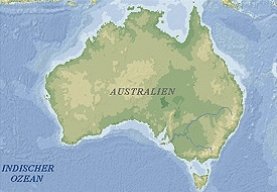
One country - one continent
Kangaroos and koalas are perhaps the best known Australians. They owe their survival to the geological development history of the country. About 35 million years ago, Australia drifted away from the southern continent Gondwana. The wombats, Tasmanian devils, possums, wallabies and many other marsupials were able to enjoy ongoing development without competition from mammals.
About 40,000 years ago, the Aborigines settled in Australia, probably coming from Asia in boats. They were collectors and hunters, and knew only a few simple technical devices - one of these was the boomerang which was used for hunting. But they developed a complex social organisation and profound understanding for nature. Their knowledge and their history - the "dream time" - was passed on in cave drawings but above all by word of mouth. Their way of living was preserved until the southern-most continent was discovered by Britain.
In 1770, James Cook landed in Botany Bay, which is today part of Sydney. The British government decided to use the new continent as penal colony. The first ship with about one thousand settlers, three-quarters of whom were convicts, landed in 1788. After 80 years, deportation ceased, and Australia became independent in 1901.
The penal workers helped to discover the huge country. Sheep and cattle breeding were introduced in a big way, and sugar plantations grew up along the west coat. In 1850, gold was found, joined later on by diamonds, opals, uranium and other valuable heavy metals.
Today, Australia is an immigration country. In spite of its bonds to Great Britain, it is opening up relationships particularly and increasingly with its Asian neighbours. The Aborigines today are Australian citizens and demand respect for their rights and traditions. The Aborigines were the first to receive the Olympic flame in June at Uluru (Ayers Rock).